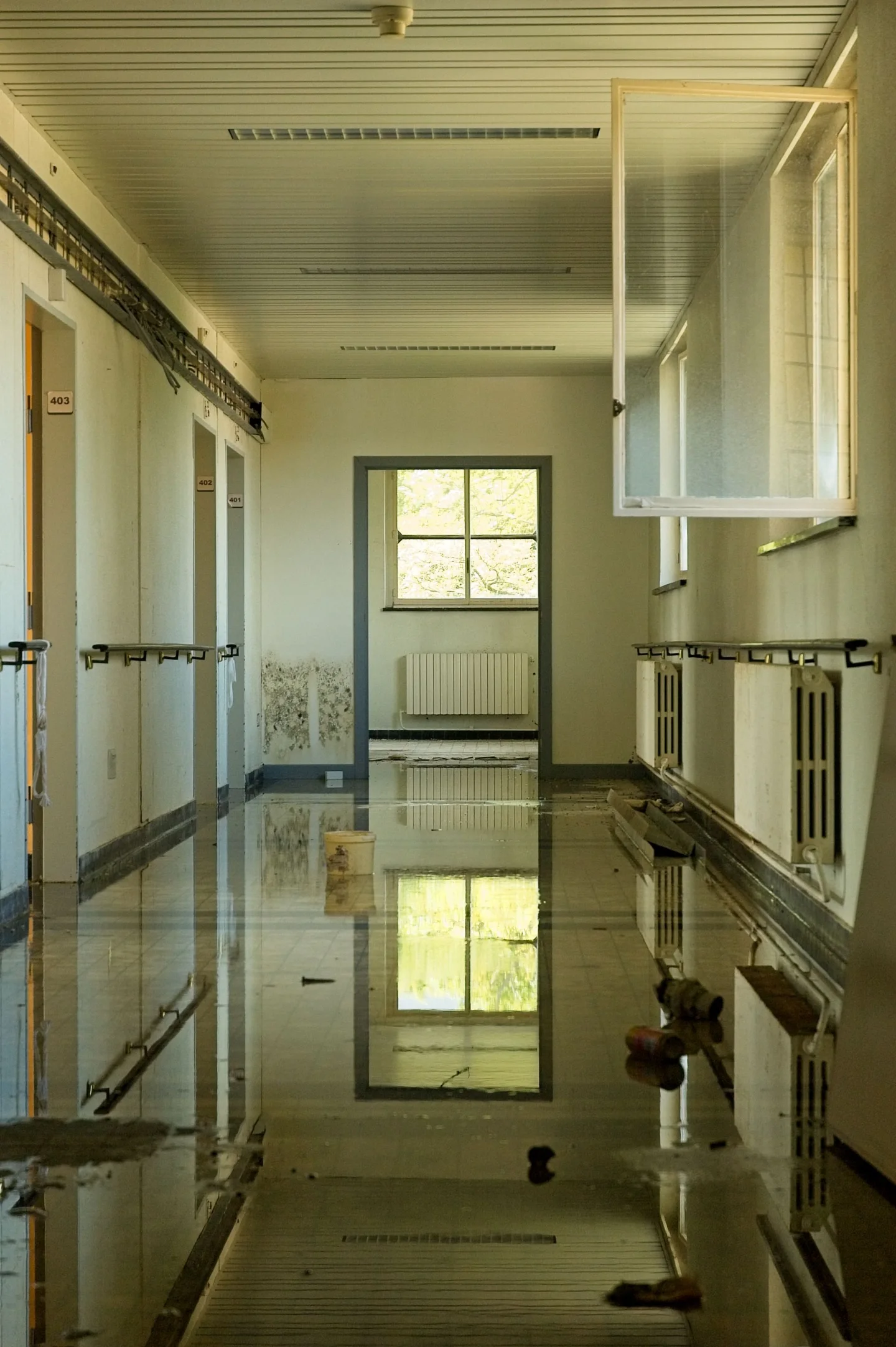
Late in the evening, water is seeping from under the bathroom door into the hallway. Or in the morning a brown stain appears on the ceiling, and the edge of the parquet has already started to lift. After a burst pipe, a leak or an overflowing washing machine, the first steps determine how much damage is done. Cleaning is the second step: before that, there are a few things you should always do, and the order matters.
The first steps, in order
- Electricity: if the water may have reached a socket, extension lead or appliance, the wet area must not be entered until the power has been switched off. If the fuse box can only be reached through the water, do not enter; call an electrician instead.
- Source of the water: turn off the main stopcock or the isolation valve for the affected section. If the water is coming from a neighbouring flat or a shared pipe, notify the neighbour and the building manager as well.
- Documenting: before anything is moved, take photos and video of the wet floor, the walls, the furniture and how far the water reached.
- Salvage: valuables, documents and electronics must be removed from the water and from the flooded room.
- Ventilate if the weather allows, so that moisture is not trapped inside.
Safety first
Electricity and water together are a lethal combination, so the first step is not removing the water but eliminating the risk. This comes before every other step, even if the water keeps spreading in the meantime. With a leak from above, look up at the ceiling too: if a suspended ceiling or the plaster is sagging or bulging, nobody should stand underneath it.
If the water came from a drain or sewer, treat it as wastewater: do not touch it with bare hands, and keep children and pets away from the affected room.
With water damage, the first step is never mopping: first the power, then the water supply.
Documenting: before anything is moved
Photos and video may later be needed in all sorts of discussions: with the neighbour, the building manager, the owner or the insurer. It is worth taking both wide and close-up shots, recording damaged items before they are thrown away, and noting when the water was first noticed.
What the insurer covers, and to what extent, is decided by the policy and the insurer, not by the cleaning. It is therefore worth agreeing how to file the claim directly with your insurer, and asking whether an on-site inspection is needed before restoration.
What can be saved
- valuables, documents and electronics must be lifted out of the water
- put film or a piece of wood under furniture legs
- rugs and carpets should, where possible, be rolled up and moved to a dry place
- damp textiles should be spread out, not left folded
Timing matters with moisture too. According to guidance from the US Environmental Protection Agency (EPA), if wet materials and surfaces are dried within 24–48 hours of a leak, mould growth will not start in most cases. That is why water should be removed as soon as possible — but with the right equipment.
What to avoid
| To avoid | Why |
|---|---|
| Using a household vacuum cleaner to pick up water | Household appliances are not designed for water: risk of electric shock and damage. |
| Switching on an electric heater next to wet flooring while water is still standing there | Electrical appliances near water pose a risk of electric shock. |
| Repainting or retiling before the surface has dried | Moisture gets trapped under paint and flooring, and later shows up as stains, peeling paint or odour. |
| Cleaning up waste water without gloves | Water coming from a drain or sewer may be contaminated. |
Then it is our turn
On the phone, simply tell us what happened, where, and how large the area is. If you have photos or a video, we use them to prepare for the job that awaits us on site. At the end of the call, we tell you when we can start and with which team, and we only promise what we can deliver.
What to have ready before you call
- where the damage occurred: in a flat, an office or a common area, and on which floor
- how large an area and which rooms are affected
- where the water came from: a pipe, a leak, an appliance or a drain — in other words, clean water or wastewater
- whether the water has already been shut off and the power switched off
- a few photos or a short video of the site
This tells us which equipment and how large a team to send, so the team does not discover on site what they should have brought.
On site, we remove the contamination left by the water, and clean and disinfect the floor, the lower section of the walls, the bases of furniture and the affected rooms, so they are safe to use again. We explain the difference between cleaning and disinfection in this article .
If the structure needs mechanical drying, we will flag this on site and carry out the final clean once it has dried out: that way the surfaces do not just look clean, they really are in order. We take photos before and after the work and provide a short report on the work done, which you can pass on to the owner, the tenant or the insurer.
If it has just happened
If the water is flowing right now, all you need from this article is the sequence: power, shut-off, photos, then a phone call. You will find our contact details on the on the contact page ; everything else can wait until the team arrives.