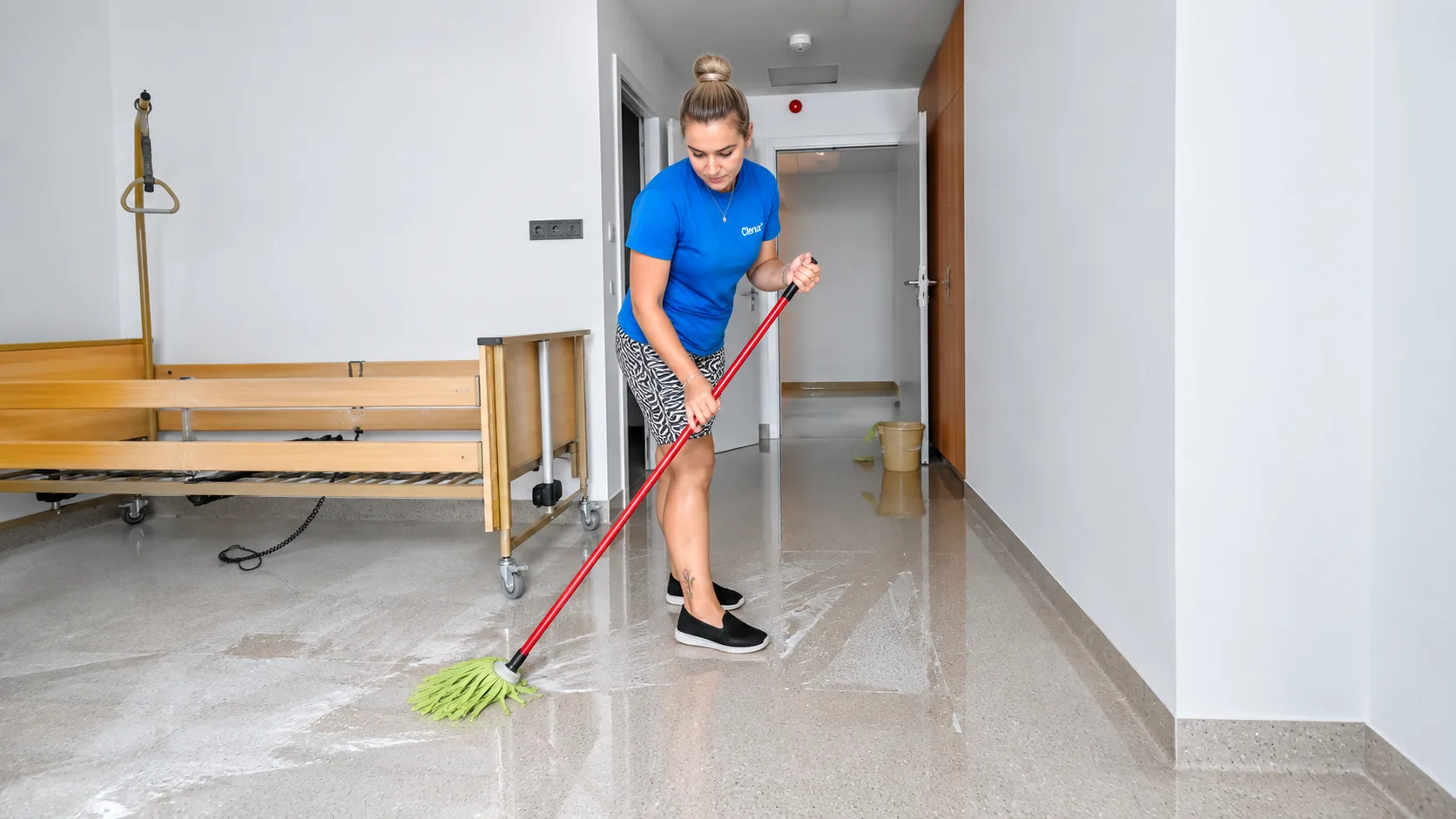
With a regular cleaning contract, the first visit is not what counts; the tenth is. At the start everyone makes an effort: arriving on time, asking about everything, even wiping down the radiator. The question is whether the quality is still the same months later, when the contract has become routine.
Regular cleaning rarely fails because of one big mistake. It slips little by little: someone different turns up, a request is forgotten, a time slips, and after a while the client is checking everything themselves again. The criteria below let you judge a partner's reliability, and you can hold them to every one.
Why do most cleaning contracts slip over time?
There are three recurring reasons, and none of them is a matter of professional skill:
- slipping appointment times: agreed for the morning, they arrive in the afternoon, and the whole day has to be rearranged;
- a new face every time: nobody knows what needs doing where, and requests always start from scratch;
- no traceability: if something is missed or damaged, there is no way of knowing who was on site and what they did.
A good contract makes these three points predictable. The following six criteria all stem from this.
Six criteria you can hold us to
1. A permanent team
If someone different arrives every time, you have to explain every time what needs doing and how. On regular contracts, the same trained team works on site. In case of illness or holiday, a pre-arranged replacement arrives with the same task list, and covering the absence is our job, not the client's.
2. A site-specific checklist
“Clean the flat” is too broad a brief. A good assignment sets out, room by room, what is included and what is not, and follows it through the same way every time. Special requests go on the same list, so you do not have to repeat them, and whether the door handles or the radiator get done does not depend on the cleaner's memory.
3. Fixed day and time window
Regular means predictable. Once the quote is accepted, we fix the days, the time window and the contact person. If a visit needs to be moved, we agree a new time — the earlier you let us know, the better — and the frequency can be changed later too.
4. A single point of contact
For a question, a change of appointment or a complaint, you only need to reach one person, who knows the site and the agreement. You don’t have to explain everything from the beginning each time, or work out who is best to call.
5. Feedback after every visit
A short written report on what was completed. If anything differed from the usual — for example, a cleaning product ran out or we found a damaged item — we flag it with a photo. This keeps the client informed even when they are not on site, with no need to piece together afterwards what happened.
6. Registered employment and liability insurance
Clients let the team into their home or office, so they rightly expect the team members who arrive to be legally employed, and that settling any damage won't fall to them. We work with 5M Ft liability insurance, using our own equipment and products; our products are approved in the EU, each with a safety data sheet.
Reliability is a matter of system: the same team, the same checklist, every time.
Questions for the first meeting
It is worth asking about the points above when you request a quote. The answer quickly shows whether the partner works to a system or from one job to the next.
| Question | Sign of a good answer |
|---|---|
| Who comes, and what happens if they are ill? | A permanent, trained team; a pre-arranged substitute working from the same checklist |
| What does one visit include? | A written, room-by-room list that forms part of the quote |
| How do I know what has been done? | Written feedback after every visit, with photos where anything differs |
| Who can I call if I have a question? | One name and one contact who knows the site |
| What if something goes wrong? | A written commitment to rectify issues, plus liability insurance |
| Who brings the equipment and the products? | Supplied by the partner; gentle products agreed in advance where there are allergies or small children |
Offices and residential buildings have different priorities
For a business, reliability starts with trust and access. In offices we work outside working hours, after closing or before opening, we record key and access card handling in writing, and if someone is unavailable, a replacement you have already met steps in. Businesses receive a single monthly invoice.
In a residential building, the property manager is accountable to the residents. We work in the common areas of a residential building in Siófok under an annual contract: every month, photos record the condition before work begins and after cleaning, and the August documentation was attached to the certificate of completion. The details are in the case study .
What depends on the client
A good regular contract works both ways. A partner can maintain the standard if requests are recorded once, in writing, and if you let them know when something wasn’t done the way you wanted. The rhythm is a joint decision too: whether a weekly, fortnightly or monthly visit suits the space is covered in a separate guide .
And if something does go wrong?
If anything is not done as agreed, we will put it right free of charge once you raise a complaint; the details are set out in our guarantee . What sets a good partner apart is not that it never makes a mistake, but that you never have to raise the same issue twice: it records it, fixes it, and by the next visit it is on the list.