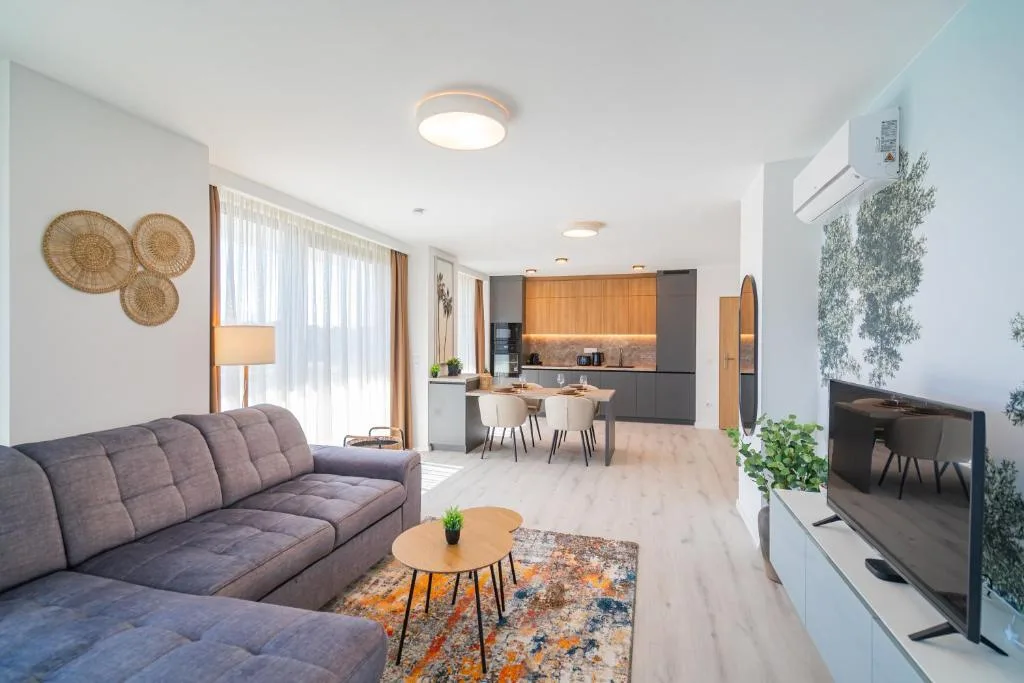
By the middle of the second week, splashes are already showing on the bathroom mirror, there are crumbs on the kitchen worktop and sand around the shoes in the hallway. Or the opposite: on cleaning day there is hardly anything to do, because the apartment looks almost exactly as it did last time. Both situations point to the same thing: the cleaning schedule does not match how the space is used.
Weekly, fortnightly or monthly? There is no single right answer, because the right frequency is set by how a space is used, not by habit. A flat with one occupant and a family home with young children, a three-person office and a busy reception area all call for very different rhythms. This guide helps you find the rhythm that fits your situation, and recognise when it is time to change it.
What determines the frequency?
- how many people use the space and how much time they spend there: a flat that stands empty during the day wears more slowly than one used as a home office
- whether there are pets, young children or family members with allergies: hair, crumbs and dust build up faster, and it matters more
- how much the kitchen and bathroom are used: in a household that cooks every day, grease builds up faster; with frequent showers, limescale does
- whether clients or visitors come in: the entrance, the washroom and the meeting room are part of the first impression
- the type of tiling, flooring and furniture materials: dust and fingerprints show sooner on dark, glossy surfaces
For homes: typical frequencies
The guidelines below come from experience; they are not rules. They give you somewhere to start.
Fortnightly
In a one- or two-person household, a fortnightly visit is often enough if the everyday tidying is taken care of: washing up, airing the rooms, keeping surfaces in order. Between visits the home stays liveable, and the cleaning maintains rather than restores.
Weekly
For families, pet owners or larger homes, weekly cleaning keeps standards consistent. The point is not that a fortnightly visit is too little for the home, but that by the second week everyday life starts to take its toll: hair on the floor, limescale in the bathroom, grease in the kitchen.
Monthly
A monthly visit works better as a supplement: for hard-to-reach areas, or in a property used less often, such as a holiday home or a flat standing empty between lets.
| Situation | Typical frequency | What to look out for |
|---|---|---|
| One- or two-person household, with everyday tidying | Fortnightly | Whether the bathroom and kitchen stay in order between visits |
| Families, pets or larger homes | Weekly | By the second week, the floor and bathroom already show visible wear |
| Occasionally used flats and holiday homes | Monthly, as a supplement | Dust and humidity do their work even when a space is unused |
| Office | By headcount and customer footfall | High-traffic areas more often, the rest less often |
For offices: footfall decides
In an office, headcount and visitor numbers set the pace. Shared areas, the kitchenette and the toilets need attention sooner than individual workstations. That is why a mixed schedule is often the most efficient: rather than one frequency for the whole office, each zone gets its own.
- more frequently: washrooms with consumables restocked, kitchenette, entrance, reception and glass doors
- regularly: meeting rooms, corridors, floors and shared areas
- less often: individual workstations and less frequently used rooms
- periodically: upholstered chairs, carpeted floors and glass walls, for example once a year or after a refit
In offices, we work outside business hours, after closing or before opening, so cleaning does not disrupt your work, and the same team always comes.
Residential buildings: the season matters too
Frequency can vary not only by space but also by season. In Siófok, the Beachfront Residence stairwell sees heavy, frequent use in summer, so we clean it more often during the season and monthly for the rest of the year: 11 times in the first summer season, and monthly since then, supplemented by periodic deep cleaning. We set the rhythm once in the annual contract, so the property manager does not have to arrange each visit.
Regular cleaning does not replace deep cleaning
However good the rhythm, regular cleaning keeps visible and accessible surfaces in order. High points, the areas behind appliances and deep in the grout still need a separate visit once or twice a year. For exactly which areas these are, see our article on on the hidden spots of deep cleaning .
At the right frequency cleaning maintains, and the space does not need restoring every time.
How can you tell the rhythm is right?
If the space is visibly worn between visits, the schedule is too infrequent. If the team finds little to do, it is worth reducing the frequency or spending the time on other points, such as radiators or door panels. The right schedule is not something you hit on once, but something you fine-tune over a few visits:
- Start with a frequency that suits how the space is used, based on the guidance above.
- In the first few weeks, notice what state your flat or office is in just before the cleaning.
- Read the written feedback after each visit: it shows where dirt builds up faster.
- If needed, adjust the frequency, or put some zones on a more frequent schedule and others on a less frequent one.
Frequency, then, is not a number decided once, but a setting that can change with use: a pet arrives, the team grows, the season begins. With a regular engagement, the same team works on site, so they are the first to notice when the rhythm no longer suits the space, and a single conversation is enough to adjust it. What else to expect from a regular partner is covered in a separate article .