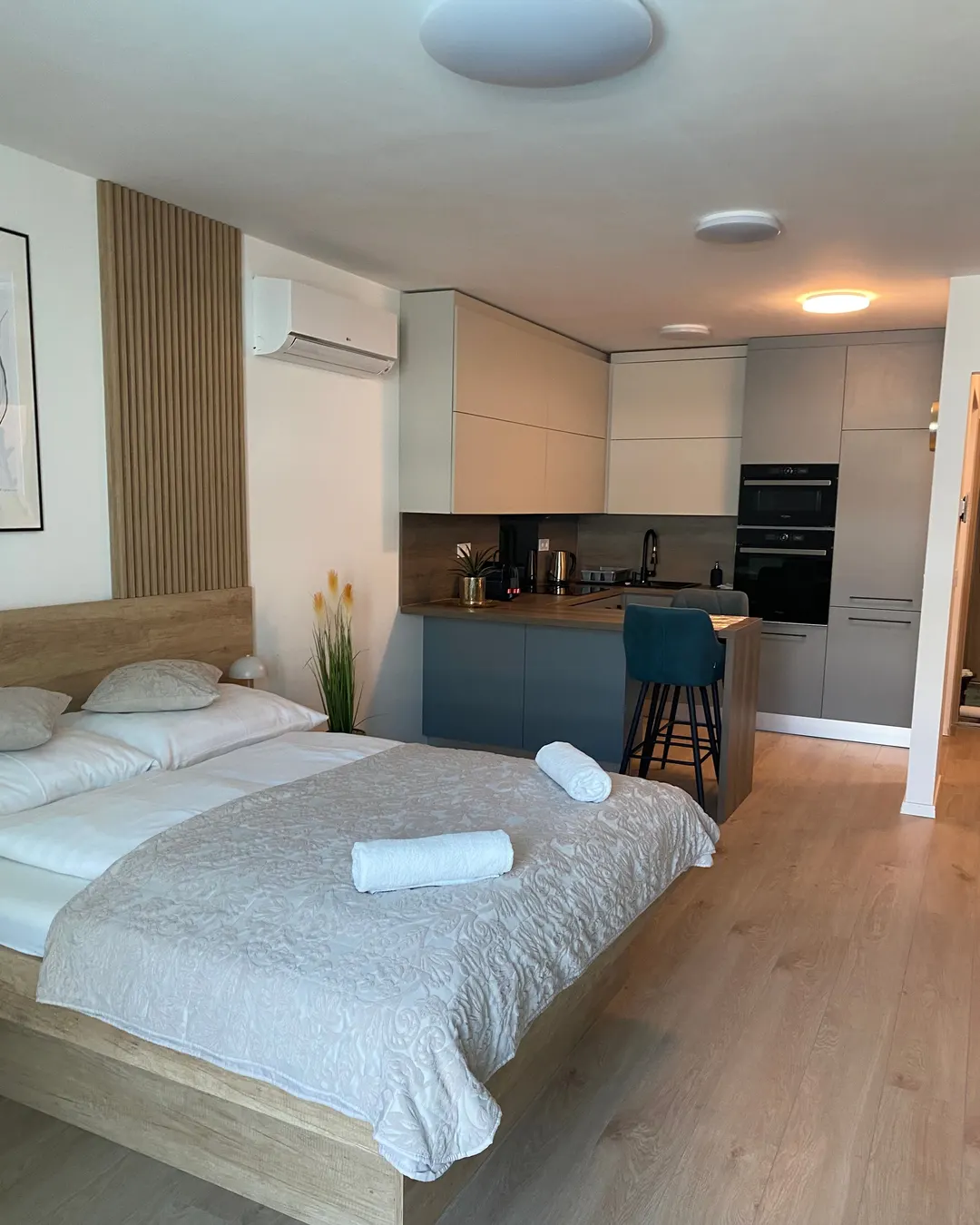
On handover day, the landlord rarely walks through the flat the way the tenant expects. They do not look at the living room as a whole: they open the oven, run a finger along the top of the wardrobe, look into the shower track. Within a few minutes it becomes clear whether the handover will be brief or a long discussion about the deposit is about to begin. The good news is that these spots are well known and can be put right in advance with a thorough clean.
Two separate questions: wear and dirt
At handover, two things are easily confused. One is the wear that comes with living in a flat: parquet losing its sheen, a loose door handle, ageing paintwork. The other is dirt: grease, limescale, dust, adhesive residue. How the former counts towards the deposit settlement is determined by the tenancy agreement and what the parties have agreed; the agreement is what counts here, and in a dispute a legal professional can advise you. Dirt, however, is entirely in the hands of the person moving out, and this is typically exactly where disputes get stuck.
With clean surfaces any damage looks less serious, and is easier to agree on.
Kitchen: where most handovers are decided
The kitchen is the most common point of dispute, because this is where dirt builds up in layers and where the most doors open. Grease released into the air while cooking settles on every horizontal surface and binds the dust, so the tops of cupboards and the extractor hood are covered not with ordinary dust but with a sticky film. It comes off with a degreaser and contact time, not with force.
| Points | What gets checked at handover | What to watch for when cleaning |
|---|---|---|
| Oven | interior, baking trays, rack, door glass | baked-on grease needs dwell time, not scrubbing |
| Cooker hood | filter and housing | the top of the casing too, not just the bottom |
| Fridge | shelves, drawers, rubber seal | dirt stays trapped in the folds of the seal |
| Cupboards | inside, drawers, tops of cupboards | emptied, shelf by shelf |
| Above the worktop | tiles and grout | grease settling in the grout discolours it |
| Sink | basin, tap, drain | limescale builds up at the base of the tap |
Bathroom: limescale, silicone, drain
Limescale on the shower enclosure, taps and toilet, discoloured silicone and the state of the drains come up at almost every handover. Limescale builds up in layers, so a weekly wipe will not remove it: it needs a descaler suited to the surface and fittings, and the right contact time. Choosing the product matters more than force here, because acidic products permanently damage marble and some stone surfaces.
What cleaning won't fix
Mouldy silicone cannot be fixed by cleaning, only by replacing it. Likewise, a cracked tile, a dripping tap or a slow-draining trap is a repair issue, not a cleaning one. It is worth assessing these before the handover and, if needed, having a professional fix them or agreeing them with the landlord in advance, because when they come to light unexpectedly at the handover, they carry far more weight.
Walls, doors, windows
The grey band around switches and door handles, adhesive and nail marks left on the walls, the tops of doors and the frames all stand out in an empty flat, where nothing draws attention away from them. Wall damage is not a cleaning matter, but the dirt around it is. At the windows, the landlord looks not only at the glass but also at the frame, the track and the sill; on keeping the glass streak-free, we have written a separate guide .
What almost always gets missed
- radiator fins and the wall behind the radiator
- dust and marks on the floor where furniture stood
- the insides and shelves of built-in wardrobes
- skirting boards and the corners of the floor
- the balcony, the terrace and the storage unit that comes with the flat
One week before handover: the right order
- Get out the tenancy agreement and the move-in handover record or photos: these show the condition the flat started in.
- Walk through the flat using the points above, and list separately anything that needs repair rather than cleaning.
- Move out: all belongings, boxes and your own furniture leave the flat.
- Cleaning the empty flat from top to bottom, from the high points down to the floor.
- Photos room by room, immediately after cleaning.
- Handover to the landlord, ideally with a joint walk-through.
Why the right order differs when moving in and moving out is summarised in in this article .
Photos: so both parties start from the same baseline
Room-by-room photos record the condition at handover, so if questions arise, nobody has to rely on memory. It is best to take photos in daylight, ideally from the same angles as when you moved in, and to photograph appliances and cupboards with their doors open. We hand over the flat at the end of the job with room-by-room photos, so both tenant and landlord have a clear record to refer to.
At handover, what matters is not whether the flat looks clean, but whether it is still clean once the doors are opened.
Through the landlord's eyes
The reverse is also true. If the flat passes to the next tenant clean and photo-documented at a change of tenancy, that is the benchmark at the next move-out. A clean handover is therefore not the end of one tenancy but the starting point of the next. If you already know the handover date, when you request a quote simply include it along with the size of the flat.